Merchants: Accept BNB Payments in an Afternoon With No KYC Gateway
Accept BNB fast: hosted checkout, plugins, or API. CryptoPayr supports BNB and 110+ coins with a no KYC onboarding flow.
CryptoPayrSep 10, 202610.00 min read
Merchants: Accept BNB Payments in an Afternoon With No KYC Gateway
Yes, merchants can accept BNB right now, and the fastest route is a crypto payment gateway with hosted checkout or a payment link, not a custom build. Sign up, verify your account, plug in a checkout button or API, then decide whether you want funds held in BNB or auto-converted to a stablecoin. CryptoPayr supports BNB alongside 110+ other coins through a no-KYC merchant flow, which shaves days off the setup most gateways demand.
TL;DR:
Setting up BNB payments takes less than a day with hosted checkout or payment links, especially if testing in sandbox is completed first.
Choosing auto-conversion to stablecoins simplifies bookkeeping but involves conversion spreads and payout delays, while holding BNB introduces volatility risks.
Gateway fees vary: transaction percentages, network costs, and conversion spreads can significantly impact overall costs at higher volumes.
Proper security and reconciliation practices include unique transaction IDs, webhook automation, and manual logs for first transactions to prevent mismatches.
Most first-time merchants should prioritize sandbox testing, enable auto-convert options if avoiding crypto volatility, and start with hosted checkout for quick deployment.
Cryptopayr
Start Accepting Crypto Payments
CryptoPayr helps businesses accept BNB and over 110 cryptocurrencies through a user-friendly, no-KYC payment gateway with minimal fees.
Getting your first BNB payment live usually takes less than an afternoon if you pick the right integration path. Here’s the order that actually works, based on how most gateway onboarding flows are structured:
Create a merchant account and verify it. Some providers, including Binance Pay, require a signed merchant agreement before you touch the API, following a three-step onboarding process of account creation, agreement, and integration. No-KYC gateways skip the identity paperwork entirely.
Pick your integration model. Hosted checkout, a plugin, or an API, depending on your platform and technical resources.
Set your settlement currency. Decide now whether you want to hold BNB or convert it automatically, since this affects your accounting from day one.
Turn on fraud controls and pricing display. Dynamic fiat pricing keeps your storefront readable even while BNB’s dollar value moves.
Test in sandbox, then go live. Never skip this step, even under launch pressure.
Each step feeds the next, so rushing the verification stage or skipping sandbox testing tends to surface as a support headache later, usually during your first real payout.
Which Integration Method Fits Your Business?
Most businesses accepting crypto choose from three broad models: a payment provider with built-in crypto support, a dedicated crypto gateway, or direct wallet acceptance, each trading control for simplicity in Stripe’s own framing of the decision. Inside that choice, the actual integration method matters just as much.
Hosted checkout is the fastest option to deploy. You redirect customers to a payment page the gateway manages, and it needs almost no maintenance, which makes it the default for small merchants and solo sellers.
E-commerce plugins for platforms like Shopify, WooCommerce, or Easy Digital Downloads let you add BNB acceptance without touching code, often in under an hour.
API integration gives you full control over checkout UX, webhooks, and rate locking, but it demands developer time and ongoing maintenance.
Payment links and QR codes work well for invoices, one-off sales, or in-person transactions where a full checkout flow is overkill. Binance Pay itself leans on this pattern, supporting QR-based payment flows alongside multi-token acceptance.
Pro Tip:Start with hosted checkout even if you eventually want the API. It gets you live and collecting real transaction data while your developer builds the custom flow in parallel.
Ask any provider you’re evaluating for sandbox credentials before you commit. If they can’t hand you a test environment in minutes, that’s a signal about how the rest of the integration will go.
Should You Hold BNB or Convert It to Cash?
You have two real choices once a BNB payment lands, and picking the wrong one for your business creates problems that show up weeks later on your books.
Auto-convert to fiat or a stablecoin. This cuts your exposure to BNB’s price swings and simplifies bookkeeping, since you’re recording a fixed cash value instead of tracking a fluctuating asset. The trade-off is a conversion spread and dependency on the gateway’s payout rails, a pattern also visible in PayPal’s crypto settlement options for merchants in supported regions.
Hold the BNB. You skip the conversion cost, but now you’re carrying a volatile asset on your balance sheet and need a custody and accounting plan for it.
Settlement speed depends partly on confirmation windows on BSC, and partly on how quickly your gateway can move BNB into cash. That second part hinges on liquidity, and Binance itself remains one of the largest liquidity sources for BNB, which affects how fast a conversion clears without slippage. Refund handling also differs by method: a gateway can typically reverse a transaction through its dashboard, while a payment sent straight to a wallet has no built-in refund mechanism. You’d be sending a brand-new transaction back manually.
What Fees Should You Expect?
Fee structures vary more than most merchants expect going in, and the differences compound fast at volume.
Gateway fees usually run as a percentage per transaction, though some providers offer flat-fee tiers or monthly plans instead.
Network fees on BSC are typically small, but whether the gateway absorbs them or passes them to the customer changes your effective cost per sale.
Conversion spreads apply whenever you auto-convert BNB to fiat or a stablecoin, and this spread is often where a gateway’s “low fee” marketing gets misleading.
Volume tiers and white-label contracts can lower your per-transaction cost substantially once you’re processing at scale, so ask about tiered pricing before you settle on a provider.
Read the fee schedule closely before signing up. A gateway advertising a headline rate near zero can still cost more overall once conversion spread and network fee pass-through are factored in.
How Do You Secure and Reconcile BNB Payments?
Every BNB transaction is final and recorded on-chain, which means the security work has to happen before the payment lands, not after.
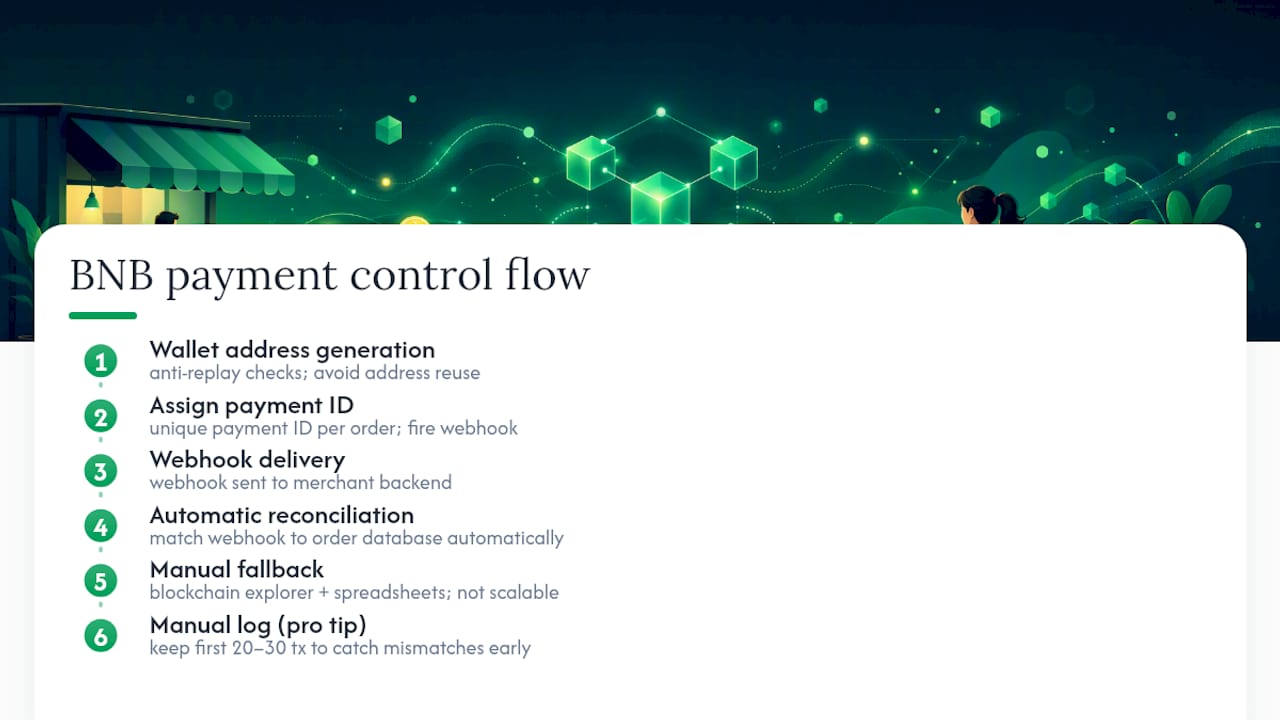
Wallet address generation needs anti-replay checks so a single address isn’t reused in a way that causes payment mix-ups. Reconciliation gets far easier when your gateway assigns a unique payment ID per order and fires a webhook you can match against your order database automatically. Skip that, and you’re manually cross-referencing blockchain explorers against spreadsheets, which doesn’t scale past a handful of daily orders.
On compliance, expect KYC and AML expectations to differ sharply between providers. Some gateways require full identity verification before you can accept a single payment; no-KYC platforms shift that burden, letting you launch faster while you handle your own regulatory obligations based on your jurisdiction and business type. Fraud prevention should include basic risk scoring, address whitelisting, and per-transaction limits, especially early on while you’re still learning your typical order patterns.
Pro Tip:Keep a manual log of your first 20 to 30 BNB transactions, even if your dashboard tracks everything automatically. It’s the fastest way to catch a reconciliation mismatch before it becomes a pattern. For a deeper look at wallet verification and fraud prevention specifically, identity verification practices for digital assets cover the mechanics merchants often miss.
What Should Be on Your Pre-Launch Checklist?
Before a single customer pays you in BNB, run through this:
Send test payments through both sandbox and mainnet, and confirm your webhooks fire correctly under confirmation delays.
Verify that price locks hold during checkout, and that order states transition properly when a payment only partially confirms.
Test a refund end to end, including how it appears in your accounting system.
Write clear customer instructions for paying with a wallet, including what a QR scan should look like on their end.
Testing webhook reliability and price feeds against live market data catches the most common integration failures before they reach a paying customer. Skip this checklist under launch pressure, and you’ll find the bugs the hard way, in front of someone trying to pay you.
Why CryptoPayr Fits Merchants Accepting BNB
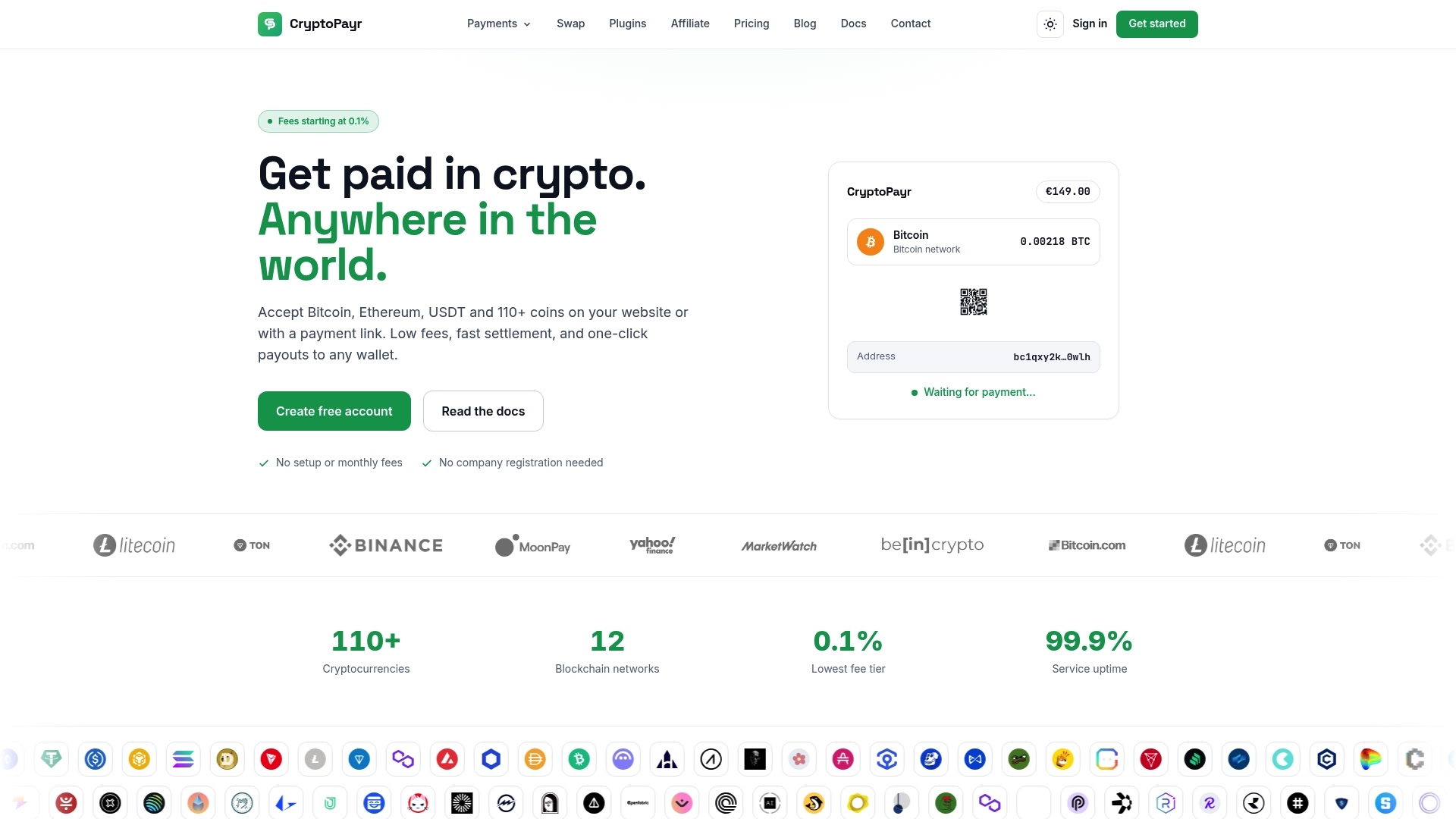
A payment gateway supports BNB alongside many other cryptocurrencies through hosted checkout, e-commerce plugins, and a full API, with optional KYC processes that may expedite onboarding compared to some providers. Settlement works either way: hold BNB directly or auto-convert to a stablecoin, matching whichever approach fits your accounting setup. The onboarding flow is designed to allow merchants to begin collecting payments quickly after signing up.
What Actually Trips Up First-Time Merchants
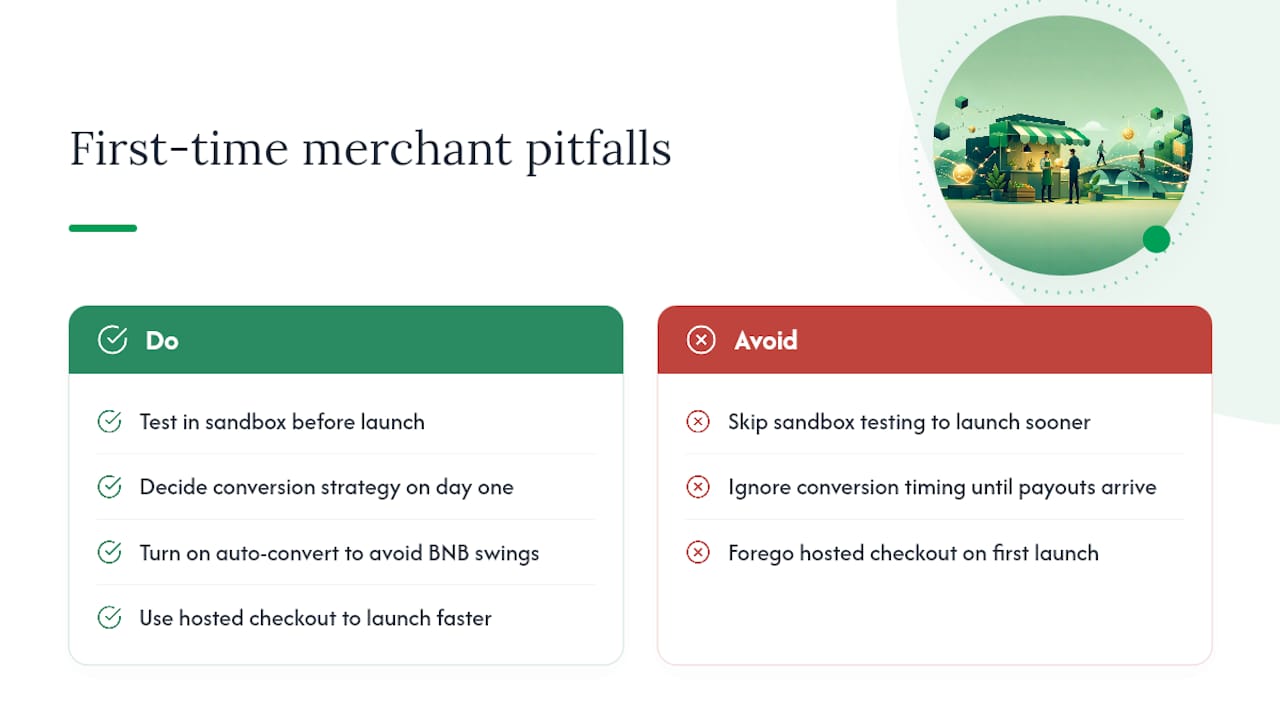
The mistake I see most often is skipping sandbox testing because the merchant wants to launch this week. That impulse is understandable, but it’s exactly backwards: a broken webhook or a mispriced checkout costs far more in refunds and support tickets than the day you’d spend testing properly.
The second mistake is ignoring conversion timing until the first payout lands short of expectations. If you don’t want to think about BNB’s price swings, turn on auto-convert and move on. If you’re comfortable holding crypto, hold it, but decide that on day one, not after your first volatile week.
Hosted checkout remains the shortcut worth taking for most merchants launching their first BNB acceptance flow, enabling a faster path from signup to first transaction.
— Dustin
Get BNB Payments Running on Your Site Today
Some crypto payment gateways offer a direct route to accepting BNB without extensive identity verification or custom integration. Features can include hosted checkout, plugins for platforms like Shopify and WooCommerce, a full API for custom flows, and no-KYC onboarding that enables fast payment collection. Fees may start low to reduce transaction costs before funds reach your account.
If you’re still deciding on settlement, the live BNB exchange rate page shows you current pricing and how conversion timing actually plays out. Ready to move past research? Head to the crypto payment gateway page, run a sandbox test, and go live with hosted checkout before the week is out.
Where to Go for Implementation Details
Once you’re ready to build, these are the references worth bookmarking: