Finance Teams: Pick Crypto Checkout for UX, Invoices for Accounting
Finance teams: decide when to use crypto checkout or invoices. Clear rules for consumer sales vs B2B billing, reconciliation tradeoffs, and CryptoPayr...
CryptoPayrSep 16, 202610.00 min read
Finance Teams: Pick Crypto Checkout for UX, Invoices for Accounting
Use a hosted crypto checkout for consumer commerce and subscription billing; use crypto invoices for B2B work, consulting, and any fiat-priced deal that needs a paper trail. Checkout wins on speed and simplicity at the point of sale. Invoices win on accounting clarity, since platforms like OnchainInvoice lock a fiat amount and generate a signed receipt. A crypto payment gateway supports both patterns across multiple coins with no-KYC onboarding.
TL;DR:
Crypto checkout is ideal for rapid, consumer-facing transactions, with confirmed payments in minutes and plugin support for major platforms.
Invoices provide better accounting clarity, generate signed receipts, and are suited for B2B deals requiring detailed paper trails and fiat valuation at payment time.
Hybrid workflows combining both methods are recommended for businesses with recurring subscriptions and project-based clients to optimize reconciliation and cash flow management.
Fee structures and settlement times vary: checkout charges small percentages with quick finality, while invoicing may have flat fees and delays due to invoice creation and rate locking.
When choosing, consider your transaction volume, need for refunds, accounting export support, custody preferences, and whether stablecoin settlement reduces FX volatility risks.
Cryptopayr
Add Crypto Payments Without Complexity
CryptoPayr helps e-commerce, SaaS, and digital businesses accept over 110 cryptocurrencies through a user-friendly, no-KYC gateway.
The two methods solve different problems, and the gap shows up most clearly once you line up five operational dimensions.
Settlement and finality. Checkout payments confirm on-chain in minutes to an hour depending on the network, then settle to the merchant’s wallet or convert to stablecoins automatically. Invoices settle the same way technically, but the invoice itself often stays open for hours or days while the customer prepares payment.
Fees and cost shape. Checkout gateways typically charge a small percentage per transaction. Invoicing tools vary more: some, like StableInvoicing, advertise zero platform fees on stablecoin transfers, while others bundle a flat fee per invoice regardless of size.
Integration effort. Checkout requires a plugin, hosted page, or API call embedded into your storefront. Invoicing usually just needs a link you can email, which is why service businesses adopt it faster than engineering teams building custom checkout flows.
Customer experience. Checkout feels like a normal online purchase. Invoicing feels like getting a bill, which fits B2B expectations but confuses a retail shopper expecting instant confirmation.
Refunds and bookkeeping. Both share crypto’s core limitation, no reversible transactions, but invoices generate cleaner audit trails because the fiat value is captured at the moment of payment.
Consider hybrid flows if you run recurring subscriptions alongside project-based client work:
Use checkout for automated recurring billing where customers self-serve.
Use invoices for one-off B2B engagements with negotiated pricing.
Route both through the same settlement or conversion layer to avoid maintaining two reconciliation processes.
An e-commerce store should default to checkout. A freelancer or agency should default to invoices. A SaaS company usually needs both.
How Checkout and Invoice Workflows Actually Run
Here’s what happens mechanically once a customer decides to pay, starting with checkout.
The merchant embeds a hosted checkout page or plugin on the site, similar to how Ghost documents embedding payment widgets with proper consent handling.
The customer selects a cryptocurrency and gets a payment address or QR code with an amount and short expiry window.
The blockchain network confirms the transaction, and the gateway detects payment through address monitoring or a webhook, a pattern documented in integration examples like CoinGate’s developer docs.
The system fires a webhook notification back to the merchant’s order system, marking the sale complete.
Funds settle to the merchant’s wallet, or auto-convert to a stablecoin to remove price exposure.
Invoicing runs on a parallel but slower track:
The merchant creates a fiat-priced invoice inside an invoicing tool.
The tool generates a payment link and locks a crypto conversion rate for a defined window.
The customer pays from any wallet, and the platform detects the on-chain transaction.
The system auto-matches the payment to the invoice and marks it paid.
A signed, tamper-evident receipt is generated showing the fiat-equivalent value at the moment of payment, the exact feature OnchainInvoice builds its accounting pitch around.
Pro Tip:Set invoice expiry windows tight, usually 15 to 30 minutes for the locked rate. Crypto can swing several percentage points in an hour, and a stale rate on either side leaves someone underpaid or overpaid.
What Finance Teams Gain and Give Up With Each Method
Checkout brings real operational upside, but it comes with tradeoffs finance teams should plan around before flipping it on.
Checkout pros:
Frictionless UX that mirrors a normal card checkout.
Plugin support for major storefront platforms cuts integration time.
Built-in support for recurring billing and subscriptions.
Checkout cons:
Brief custodial exposure while funds sit with the gateway before payout.
Provider fees apply per transaction, even on small purchases.
Invoice pros:
Fiat-first billing keeps your books denominated in the currency you already report in.
Signed receipts double as audit evidence, a detail auditors increasingly ask for.
Funds can settle directly to a wallet with no intermediary holding period.
Invoice cons:
Rate volatility between invoice creation and payment can create small reconciliation gaps.
Manual follow-up is still common when a client sits on an invoice for days.
Stablecoin-denominated invoices solve most of the volatility problem outright. Platforms built around this model advertise instant settlement across multiple chains, which removes the FX guesswork that plagues fiat-to-crypto invoicing when a customer waits three days to pay a Bitcoin-denominated bill. That single design choice, settling in a stable asset instead of a volatile one, is probably the highest-leverage decision a finance team makes in this whole comparison.
How to Choose Between Checkout and Invoices
Run through this checklist before committing to either pattern, or both:
Estimate monthly transaction volume and whether it is one-off or recurring.
Decide whether refunds need to be common or rare in your business model.
Check whether your accounting software needs a direct export format for reconciliation.
Determine your custody preference, hold funds briefly or convert to stablecoins immediately.
Confirm whether a no-KYC option matters for your customer base or jurisdiction.
When you’re evaluating a vendor, ask these questions directly:
Where does your rate come from, and how long is it locked?
Do you generate signed receipts with fiat-equivalent value?
What export formats do you support for bookkeeping?
Which chains and tokens do you actually settle, versus just display?
What’s your process when a customer disputes a payment?
Red flags worth walking away from: no signed receipts, vague settlement timing that a sales rep can’t explain clearly, and reconciliation tools that require manual CSV wrangling every month. Long-term maintenance burden matters more than initial setup speed, a point echoed in startup tooling research comparing plugin simplicity against API flexibility.
Pro Tip:Ask for a sample signed receipt before you sign anything. If the vendor can’t produce one on the spot, their “accounting-ready” claim probably means a spreadsheet export, not real audit evidence.
Why CryptoPayr Fits Either Implementation Path
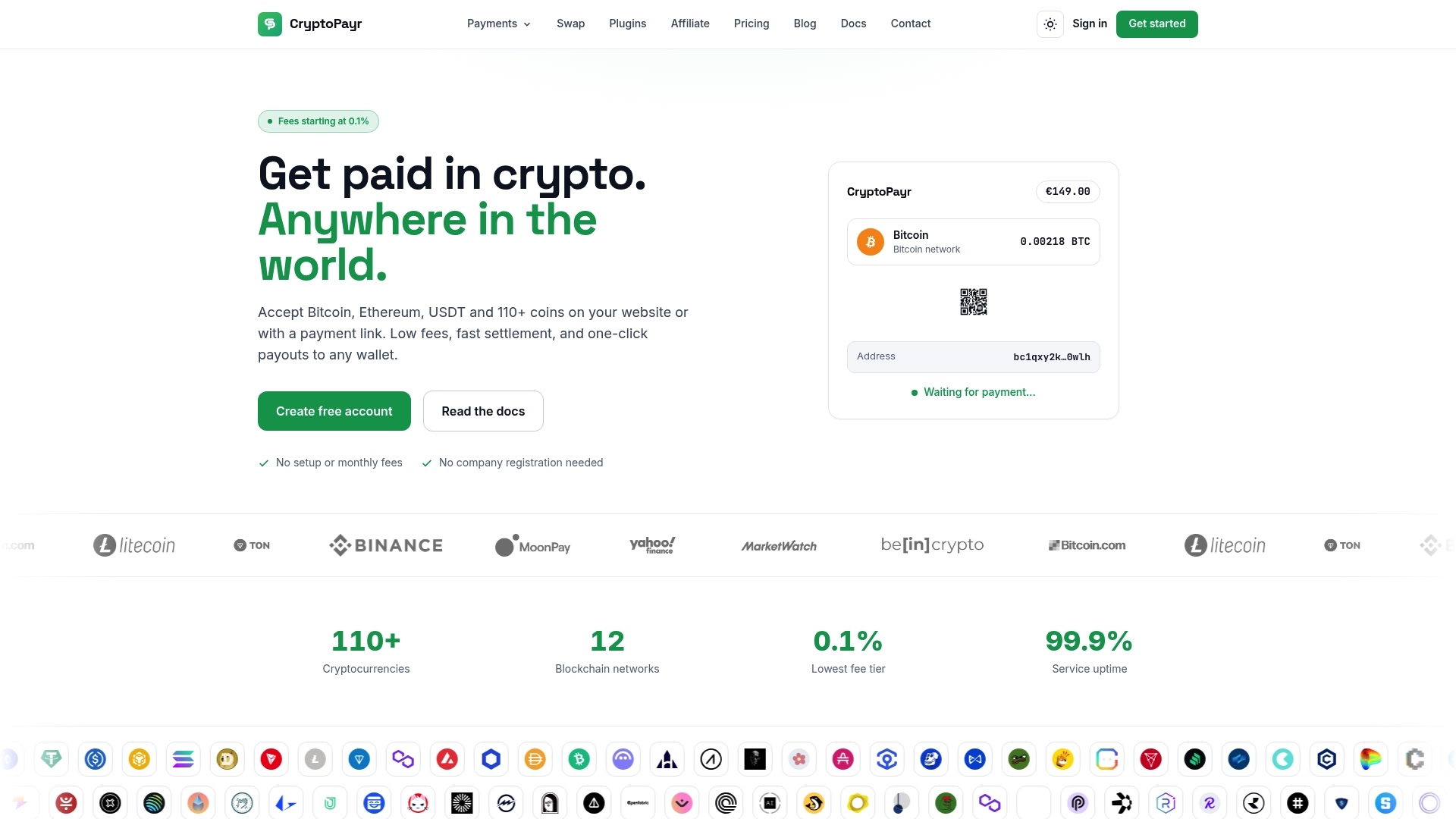
One payment provider supports both patterns from one account: hosted checkout, payment links, and API access across multiple cryptocurrencies.
Choose a hosted checkout solution when you’re running consumer-facing commerce or subscriptions and want a plugin that integrates with your existing storefront. Choose the invoicing and payment-link route, detailed in this practical invoicing guide, when you’re billing a client a fixed fiat amount and need a clean paper trail for your books.
Author Dustin built this comparison around documented platform behavior, not theory, following the same logic that Blockchain Merchant’s own guidance lands on: map the tool to your sales flow, not the other way around.
What Actually Matters Once You Cut Through the Noise
Most advice on this topic treats checkout and invoicing as competing products, and that framing is backwards. They’re accounting tools disguised as payment tools, and the real question is where in your business the money needs to look clean first: at the point of sale, or on your books.
Consumer businesses obsess over checkout conversion rates, and rightly so, but they underrate how much invoice-style receipts matter the moment they add a B2B or wholesale channel. Meanwhile, service businesses that default to invoices often ignore checkout entirely, even when a simple payment link would collect a retainer deposit faster than a five-line email chain.
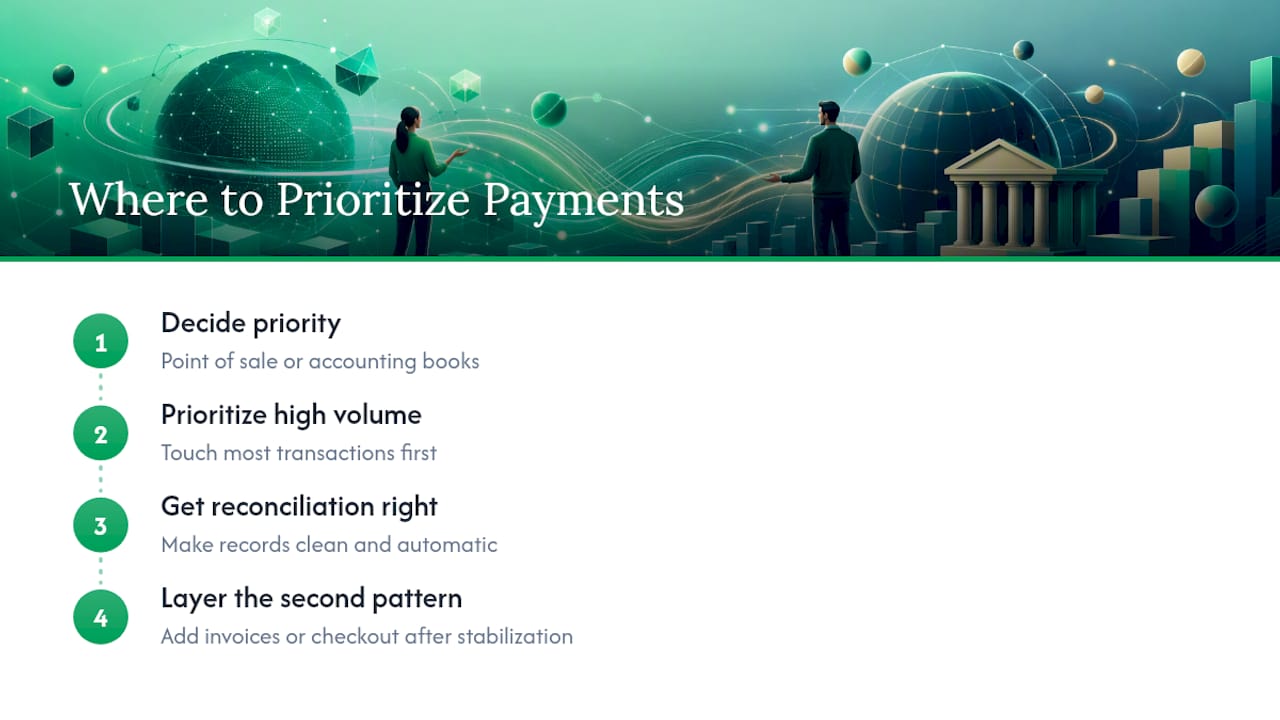
The conventional advice, pick one system and standardize, ignores that most growing businesses eventually need both. Prioritize whichever pattern touches your highest transaction volume first, get the reconciliation right there, then layer in the second pattern once the first one is boring and automatic.
— Dustin
Getting Started With CryptoPayr
If checkout fits your sales flow, CryptoPayr’s gateway gets you live with hosted checkout, plugins, or API access without a KYC queue slowing down your first transaction. If invoicing is closer to how you bill clients, the step-by-step invoice guide walks through sending a payment link that settles directly to your wallet.
A few ways to move forward today:
Try the hosted checkout demo to see the customer-facing flow firsthand.
Install a storefront plugin if you’re running OpenCart, CS-Cart, or Easy Digital Downloads.
Send your first crypto invoice using a payment link, no software install required.
Contact a sales team if you’re weighing a white-label setup for your own platform.
Merchants comparing setup costs across payment stacks often check transparent pricing breakdowns before committing, which is a fair habit to bring into any crypto payment decision, CryptoPayr included.
Where to Go Next for Implementation Details
OnchainInvoice: fiat-priced invoicing with signed receipts.
The IRS can trace on-chain transactions through blockchain analysis and exchange reporting requirements, so treat every wallet as potentially visible to tax authorities and keep signed receipts for every payment received.
What Is the Best Payment Method for Accepting Crypto?
There’s no single best method. Checkout fits consumer sales and subscriptions, while invoices fit B2B billing and fiat-denominated engagements, and many businesses eventually run both through one gateway like CryptoPayr.
What Are the Downsides of Using Invoice Factoring?
Invoice factoring typically means selling unpaid invoices to a third party at a discount for immediate cash, which reduces your total revenue and can signal cash flow strain to clients or partners who learn about the arrangement.
Does a Crypto Invoice Protect Against Payment Disputes?
A signed receipt capturing the fiat value at payment time gives you stronger documentation than a plain wallet transfer, though crypto transactions themselves remain irreversible once confirmed on-chain.
How Fast Does a Crypto Checkout Payment Settle?
Most checkout payments confirm within minutes to an hour depending on network congestion, and funds can auto-convert to stablecoins immediately after confirmation to remove price exposure.